
Stop Comparing Yourself
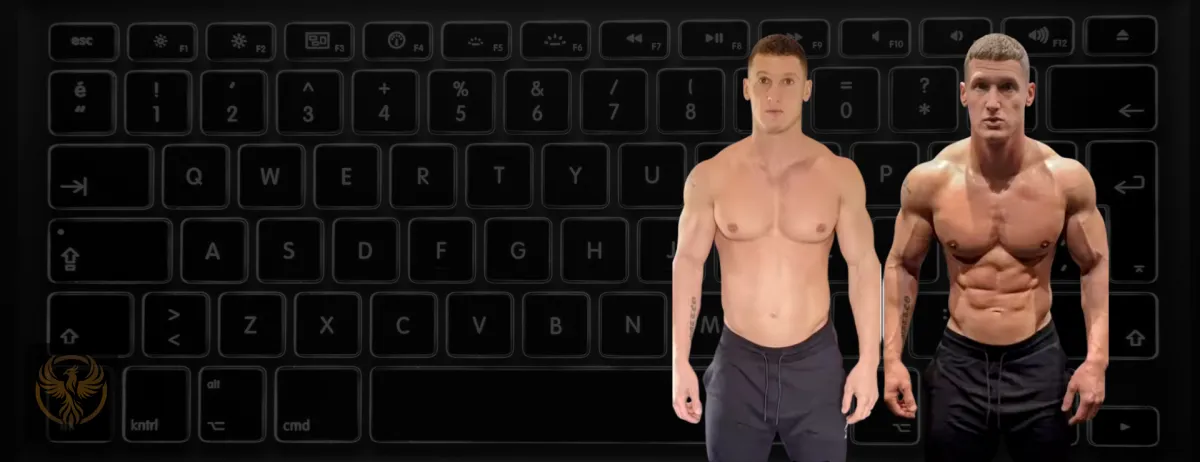
A man walks into a room. He looks average. Soft lighting, relaxed posture, no preparation. Seven minutes later, the same man looks like a fitness model. Same body. Same day. Nothing changed except the lighting, the angle, and a post workout pump.
This is not a magic trick. This is your Instagram feed every single day.
You scroll past physiques that took minutes to manufacture and compare them to what you see in your bathroom mirror. Harsh lighting. No preparation. Relaxed muscles. Then you wonder why you feel like you are falling behind.
The problem is not your body. The problem is the comparison. And the science on this is clear.
The Science of Social Comparison
In 1954, psychologist Leon Festinger published his theory of social comparison processes. The core idea: humans evaluate their own abilities and opinions by comparing themselves to others. When objective standards are absent, we look sideways. We look up. We measure ourselves against whatever reference point is available.
Social media took that natural instinct and weaponized it. A meta-analysis published in Body Image by Bonfanti et al. (2025) examined 83 studies involving 55,440 participants. The findings were definitive. Higher levels of online social comparison correlated significantly with greater body dissatisfaction (r = .454) and increased eating disorder symptoms (r = .36). The correlation between higher social comparison and lower positive body image was also significant (r = −.242).
In practical terms, the more you compare your body to what you see on social media, the worse you feel about yourself. Not slightly worse. Measurably, consistently worse.
Festinger originally described what he called a "unidirectional drive upward" when it comes to abilities. We naturally compare ourselves to those we perceive as better. Social media amplifies this by giving you an unlimited supply of upward comparison targets, each presenting their absolute peak moment as if it were their daily reality. Your brain processes this as real data. It is not.
Why Transformation Photos Are the Worst Offenders
Fitspiration content on Instagram and TikTok exists to motivate. In practice, it does the opposite for most people. A systematic review published in BMC Psychology by Jiotsa et al. (2023) found that exposure to fitspiration content is consistently associated with increased physical appearance comparisons, greater body dissatisfaction, and more negative mood states.
Transformation photos are a specific subcategory of fitspiration. They show a before and after. They imply a linear, dramatic change. What they do not show is the lighting manipulation, the strategic posing, the dehydration, and the camera angles that created most of the visual difference.
Research by Prichard et al. (2023) published in Body Image found that viewing both fit ideal and body transformation imagery was associated with lower body satisfaction and higher appearance comparison in women. The effect was mediated by appearance comparison. In other words, transformation images trigger comparison, and comparison drives dissatisfaction.
This is not about being weak or insecure. This is a documented psychological response that affects virtually everyone exposed to curated fitness content.
The Real Cost of Comparison for Executives and Leaders
For busy professionals aged 35 to 60, the comparison trap creates a specific problem. You already know how to achieve results in business. You set targets, measure progress, and iterate. But when it comes to body composition, social media disrupts that systematic thinking.
Instead of tracking your own waist measurement weekly, you compare yourself to a 25-year-old influencer with professional lighting and zero job responsibilities. Instead of measuring your body fat percentage over 12 weeks, you chase the visual standard set by someone who spent all morning preparing for a single photo.
Holland and Tiggemann (2016) conducted a systematic review of 20 studies examining the relationship between social networking site use and body image. Their conclusion was clear: specific activities such as viewing and uploading photos and seeking feedback were particularly associated with body dissatisfaction. Appearance based social comparison mediated the relationship between platform use and negative body image outcomes.
The cost is not just emotional. When you feel inadequate, you are more likely to abandon your plan. You restart every Monday. You try a new program. You break the consistency that was already working. Comparison does not motivate. It derails.
The Fix: Compare Yourself to Yourself
The research on self-compassion offers a clear alternative. Siegel et al. (2020), in a replication study published in Body Image with 363 participants, found that higher levels of self-compassion significantly protected body appreciation, even in the presence of appearance based social comparisons. When individuals practice self-compassion, the link between comparison and dissatisfaction weakens.
Self-compassion in this context is not about being soft. It is about being accurate. Your only valid comparison is you versus you.
Practically, this means building a system that tracks your own data instead of reacting to someone else’s highlight reel. Weigh yourself daily and track the weekly average. Measure your waist circumference every seven days. Take progress photos in the same lighting, same angle, same time of day. Review the data, not the feed.
When you operate this way, you apply the same discipline you use in business. You set a baseline. You measure against it. You make adjustments based on evidence. You do not walk into a board meeting and compare your Q3 numbers to a competitor’s marketing brochure. So, stop doing the equivalent with your body.
Unfollow accounts that make you feel inadequate. Not because they are bad people, but because the psychological cost is documented and measurable. Replace that scroll time with five minutes reviewing your own weekly data. Waist down by half a centimeter. Average weight trending in the right direction. Protein targets hit four out of seven days. That is progress. It will never look as dramatic as a seven-minute lighting transformation. But it compounds into something real.
The person who lost 2 kilograms this month and tracked it is further ahead than the person who spent 30 minutes scrolling transformation reels and felt bad about their reflection. One has data. The other has distortion.
Final Thoughts
The internet will keep lying to you. Lighting setups will keep making average bodies look extraordinary. Transformation photos will continue to imply results that took minutes, not months.
You cannot control what appears in your feed. You can control what you measure and what you compare against. The only competition that produces results is you versus the version of you from last week.
Track your numbers. Follow a boring plan. Stay consistent for six months. When you look at your data, not someone else’s manufactured photo, you will see the progress that was always there.
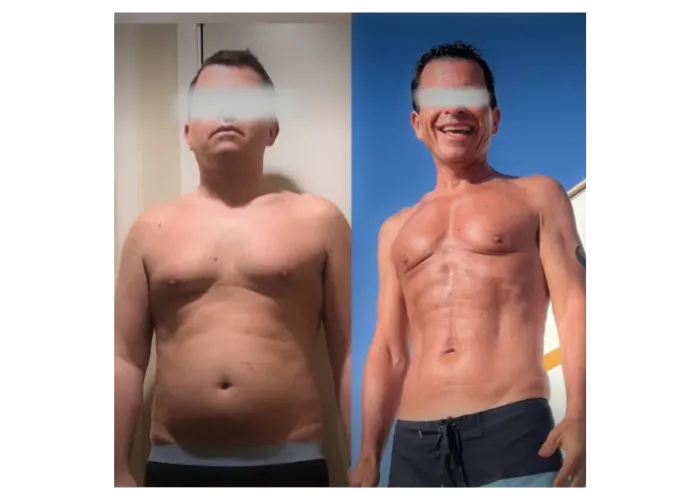
I lost 25 kilograms at 55 by doing exactly this. No dramatic transformations. No before and after lighting tricks. Just daily data, repeated meals, and a refusal to compare myself to anyone except the version of me from the previous week. It works because it is boring. And boring is what gets results.
Scientific References
Festinger, L. (1954). A Theory of Social Comparison Processes. Human Relations, 7(2), 117–140. https://journals.sagepub.com/doi/10.1177/001872675400700202
Bonfanti, R. C., Melchiori, F., Teti, A., Albano, G., Raffard, S., Rodgers, R., & Lo Coco, G. (2025). The association between social comparison in social media, body image concerns and eating disorder symptoms: A systematic review and meta analysis. Body Image, 52, 101841. https://pubmed.ncbi.nlm.nih.gov/39721448/
Holland, G., & Tiggemann, M. (2016). A systematic review of the impact of the use of social networking sites on body image and disordered eating outcomes. Body Image, 17, 100–110. https://pubmed.ncbi.nlm.nih.gov/26995158/
Prichard, I., Kavanagh, E., Tiggemann, M., et al. (2023). Appearance comparison on Instagram: The impact of fitspiration and transformation imagery on young women’s body satisfaction. Body Image, 47, 101634. https://pubmed.ncbi.nlm.nih.gov/37708721/
Siegel, J. A., Huellemann, K. L., Hillier, C. C., & Campbell, L. (2020). The protective role of self compassion for women’s positive body image: An open replication and extension. Body Image, 32, 136–144. https://pubmed.ncbi.nlm.nih.gov/31887640/









Mail
Facebook
LinkedIn
X
Pinterest
Snapchat
Reddit