

Read Your Genes
You tracked your macros. You followed the plan. You got lean. But the question nobody asks after the fat comes off is: what is your body actually built to handle long term?
Most executives treat fat loss like a destination. Lose the weight, see the abs, move on. But your body does not stop operating once you hit a low body fat percentage. Your cardiovascular system, your immune response, your inflammatory markers, your cellular repair mechanisms: these keep running in the background. And for many people, they are running on faulty wiring that no meal plan will fix.
This is where genetic testing enters the conversation. Not as a gimmick. Not as a trend. As a diagnostic tool that reveals what your parents gave you, what your body struggles with, and what you need to do about it before it becomes a problem.
What Genetic Testing Actually Tells You
A comprehensive genetic panel does not predict your future with certainty. It reveals predispositions. Tendencies. Vulnerabilities. Think of it as a structural inspection of a building. The building might stand for decades, but the inspector shows you where the cracks are forming before the ceiling falls.
For someone in their 50s who has already transformed their body through fat loss, these insights become critical. Research published in Human Genomics by Lagoumintzis et al. (2023) demonstrates that individual genetic variations influence how the body metabolizes nutrients, responds to dietary intake, and manages chronic disease risk. This is not theoretical. Specific gene variants dictate whether you process folic acid efficiently, how your body handles saturated fat, and whether your inflammatory response runs hotter than average.
A study in Nature Communications by Raisi‐Estabragh et al. (2023) used machine learning on nearly 40,000 participants from the UK Biobank to identify genetic variants associated with cardiovascular ageing. The findings linked specific genes regulating immune modulation and tissue stress response to accelerated biological ageing of the heart and blood vessels. In practical terms, two people the same chronological age can have cardiovascular systems ageing at dramatically different rates based on their genetic profile.
The Inflammation and Immunity Connection
One of the most dangerous genetic combinations involves immune function and cardiovascular health operating together in a destructive loop. A weak immune system does not just mean you catch colds more often. It means your body maintains a state of low-grade chronic inflammation as it constantly fights off threats it cannot fully resolve.
Research by Ferrucci and Fabbri (2018), published in Nature Reviews Cardiology, introduced the concept of inflammageing: the chronic, sterile, low-grade inflammation that develops with age and acts as a major driver of cardiovascular disease, diabetes, cancer, depression, and sarcopenia. The study identified genetic susceptibility as one of the primary mechanisms. Specific polymorphisms in the IL‐6 and CRP genes were linked to higher circulating inflammatory markers and increased risk of myocardial infarction.
When someone inherits both a compromised immune system and vascular vulnerability, the two conditions amplify each other. The immune dysfunction keeps inflammation elevated. The elevated inflammation acts like sandpaper on the blood vessel walls, accelerating damage that leads to atherosclerosis, stroke risk, and cardiac events.
Candore et al. (2010) confirmed this pattern in a study published in Biogerontology, finding that a pro‐inflammatory genotype was unfavorable for reaching extreme longevity and likely accelerated age-related diseases including cardiovascular conditions and Alzheimer’s. Conversely, centenarians who reached advanced age in good health tended to carry anti‐inflammatory genetic variants alongside high levels of protective cytokines.
Why Exercise Intensity Must Match Your Genetic Profile
The fitness industry sells intensity as a universal virtue. Harder workouts. More volume. Greater suffering equals greater results. But for someone with genetic cardiovascular vulnerability, this advice can be counterproductive or outright dangerous.
A major prospective study by Said et al. (2018) published in Circulation, analyzed over 500,000 UK Biobank participants and found that fitness and physical activity showed inverse associations with cardiovascular events regardless of genetic risk level. The critical finding was that moderate intensity activity was consistently protective, while the relationship between extreme exercise volumes and cardiac outcomes was not straightforward for those with elevated genetic risk.
For someone whose DNA reveals vascular fragility and heightened inflammatory response, the prescription changes. Resistance training remains essential for preserving muscle mass. Walking provides a sustainable cardiovascular stimulus without triggering excessive stress on already compromised blood vessels. But pushing into extreme conditioning territory creates additional inflammatory burden on a system already running hot.
This is where genetic data transforms from an interesting curiosity into a practical decision-making tool. It tells you not just what to eat, but how hard to train, what recovery looks like, and where the upper boundary of safe exertion sits for your specific body.
Building a Longevity Protocol from Your Genetic Data
Once you have your genetic results, the next step is translating them into daily action. This is where most people stall. They get the report, read it once, and file it away. The executives who benefit most are those who treat their DNA data the way they treat business intelligence: as inputs that shape strategy.
A practical longevity protocol built from genetic insights includes several components.
Targeted supplementation. If your genes indicate poor immune function, specific supplements like vitamin D, zinc, and omega 3 fatty acids can modulate the inflammatory response. This is not guesswork. It is guided by which pathways your body struggles to regulate on its own.
Protein calibration. Genetic variants affect how your body synthesizes and retains muscle protein. Some people require higher protein intake not because of training volume but because their bodies are less efficient at utilizing what they consume. Knowing this prevents the slow muscle loss that undermines longevity.
Cellular repair support. Genes involved in DNA methylation and repair mechanisms determine how well your cells recover from daily damage. When these pathways are compromised, interventions like adequate B vitamin intake and anti‐inflammatory dietary patterns become non‐negotiable rather than optional.
Exercise prescription. Training should align with cardiovascular resilience. For those with vascular vulnerability, moderate intensity resistance training combined with daily walking provides the protective benefits of exercise without the inflammatory cost of extreme conditioning.
Kohlmeier et al. (2016), writing in the Journal of Nutrigenet Nutrigenomics, argued that we are ready for DNA based dietary advice in general nutrition and that it can be beneficial when validated against standard nutritional evidence. The science has matured enough that gene diet interactions can inform practical, personalised recommendations.
From Abs to Longevity
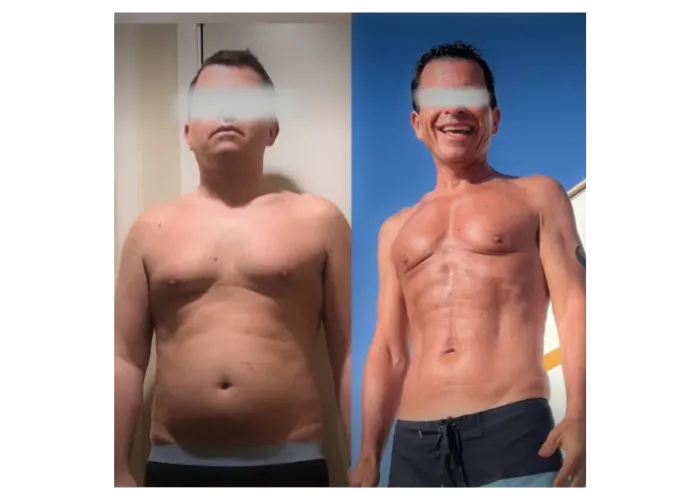
Getting lean was the first chapter. It proved you can commit to a system, execute with discipline, and transform your body. But visible abs are a surface metric. They tell you nothing about what is happening inside your blood vessels, your immune cells, or your mitochondria.
Your genetic data fills that gap. It shows you the risks that no mirror will reveal and the interventions that no generic plan will prescribe. It turns aging from a passive decline into an active management process, the same way data driven decision making turns a struggling business into a profitable one.
Your genes are not your destiny. They are your instruction manual. The question is whether you will read it and act on what it says.
Scientific References
Ferrucci, L. and Fabbri, E. (2018). Inflammageing: chronic inflammation in ageing, cardiovascular disease, and frailty. Nature Reviews Cardiology, 15(9), 505–522. https://pubmed.ncbi.nlm.nih.gov/30065258/
Candore, G. et al. (2010). Inflammation, genetic background and longevity. Biogerontology, 11(5), 565–573. https://pubmed.ncbi.nlm.nih.gov/20549353/
Raisi‐Estabragh, Z. et al. (2023). Environmental and genetic predictors of human cardiovascular ageing. Nature Communications, 14, 4941. https://www.nature.com/articles/s41467-023-40566-6
Said, M.A. et al. (2018). Associations of Fitness, Physical Activity, Strength, and Genetic Risk With Cardiovascular Disease. Circulation, 138(15), 1583–1592. https://www.ahajournals.org/doi/10.1161/circulationaha.117.032432
Kohlmeier, M. et al. (2016). Nutrigenetics and personalized nutrition: are we ready for DNA‐based dietary advice? Journal of Nutrigenet Nutrigenomics, 9(1), 28‐46. https://pubmed.ncbi.nlm.nih.gov/27286972/








Mail
Facebook
LinkedIn
X
Pinterest
Snapchat
Reddit