
3 Month Transformation

3 Month Transformation

February 13, 20267 min read

You have spent years putting on weight. Months of bad meals stacked on top of each other, compounding into a body you avoid looking at in mirrors. And still, the idea of committing to three months of structured eating feels impossible.

Let that sink in. Three months represents 0.003% of an average 80-year life. You have already sacrificed far more than that to poor energy, low confidence, and a body that does not match what you know you are capable of.

The process of losing fat is not complicated. It is governed by well documented physiological principles. But your brain will resist every step because you are dismantling decades of ingrained habits. This article breaks down why three months of focused effort works, what the science says about building new behaviors, and how to structure the process so it sticks.

The Physiology of Fat Loss in 90 Days

Fat loss operates on one non-negotiable principle: energy deficit. You must consume fewer calories than your body burns, sustained over weeks and months. A mathematical model published in The Lancet by Hall et al. (2011) demonstrated that body weight changes predictably based on cumulative energy imbalance. The model showed that the body’s weight response to a sustained change in calorie intake has a half time of approximately one year, meaning early results compound over time if you stay consistent.

For most people aiming to lose 10 to 25 kilograms, a moderate caloric deficit of 20 to 30 percent below maintenance calories produces steady fat loss without destroying training performance or triggering severe metabolic adaptation. More aggressive cuts lead to muscle loss, hormonal disruption, and the exact rebound pattern that sends most people back to square one.

The second pillar is protein. A review by Leidy et al. (2015) in the American Journal of Clinical Nutrition examined multiple meta-analyses and found that higher protein diets (between 1.2 and 1.6 g per kilogram of body weight daily) produced greater fat mass loss and better preservation of lean tissue during energy restriction compared to lower protein diets. Protein also increased perceived fullness and elevated satiety hormones after meals, reducing the likelihood of impulsive eating.

In practical terms, this means that three months of controlled eating with adequate protein does not just make you lighter. It reshapes your body composition, so you look and feel different, not just smaller.

Why Your Brain Fights You (And How Small Wins Beat It)

The biggest obstacle to a 90-day transformation is not your metabolism. It is your brain. You are trying to override eating patterns that have been reinforced for decades. Every time you reach for the same comfort food in the same situation, you are running a deeply automated script.

Research by Lally et al. (2010), published in the European Journal of Social Psychology, tracked 96 volunteers who adopted a new daily health behavior over 84 days. The study found that the median time to reach automaticity was 66 days, with a range of 18 to 254 days. The data followed an asymptotic curve: early repetitions of the new behavior produced the largest gains in automaticity, and the gains gradually plateaued. Missing a single day did not significantly derail the process.

This is critical. It means that at the 90-day mark, most new eating behaviors have crossed the threshold into automatic territory. You stop white knuckling through meal prep and start operating on autopilot. The system takes over.

But most people never get there because they set one massive goal (lose 25 kilograms) and only plan to celebrate once, at the end. Research on the progress principle by Amabile and Kramer (2011), based on analysis of nearly 12,000 daily diary entries, found that consistent small wins were the single most powerful driver of motivation and positive engagement. When people experienced even minor forward progress on a meaningful project, their motivation and emotional state improved dramatically.

Applied to fat loss: instead of one distant finish line, create weekly targets. Lose a pound. Hit your protein target five out of seven days. Walk 10,000 steps on Monday through Friday. Each of those micro victories triggers the same motivational response that keeps you going into week two, then week six, then week twelve.

The Three-Month Framework

A reliable 90-day system includes five components.

Caloric deficit. Aim for 20 to 30 percent below your maintenance calories. Use our TDEE calculator to establish your starting point, then adjust based on weekly weigh ins. If you are losing more than 1 percent of body weight per week, eat slightly more. If you are stalling, reduce by 100 to 200 calories.

Protein anchoring. Hit 1.2 to 1.6 grams of protein per kilogram of body weight daily (Leidy et al., 2015). This preserves muscle, stabilizes appetite, and prevents the “skinny fat” outcome where people lose weight but end up with no visible definition.

Boring meals. Eat similar meals each day. This removes decision fatigue, eliminates emotional eating, and turns food into a fueling process rather than entertainment. When your meals are predictable, food loses its power as a dopamine source. Cravings stabilize because your body knows what to expect.

Movement baseline. The American College of Sports Medicine (ACSM) position stand by Donnelly et al. (2009) recommends 150 to 250 minutes per week of moderate to vigorous physical activity for weight management. Combine that with resistance training three to four times per week to preserve lean mass as fat drops. Aim for 8,000 to 12,000 steps daily as your walking baseline.

Weekly review and small wins. Track weight daily. Measure waist circumference weekly. Set one specific target per week and celebrate when you hit it. These small victories compound. At three months, you will see dramatic changes in yourself. At six months, other people will start commenting.

The Real Sacrifice You Are Already Making

Here is the part most people miss. You are already sacrificing. Every year you stay overweight, you pay with reduced energy, lower confidence, worse sleep, higher disease risk, and a body that limits what you can do. Those are not abstract future consequences. They are costs you are paying right now, compounding daily.

Three months of structured eating is not really a sacrifice. It is a trade. You swap temporary food pleasure for permanent physical capability. You exchange dopamine hits from your plate for the feeling of waking up lean, energized, and in control.

Once you prove to yourself that you can commit to 90 days, something shifts. You realize that the “sacrifice” of staying overweight was always the bigger one. You were just too close to it to see.

Final Thoughts

Three months is 0.003% of your life. The physiology of fat loss is well documented. The psychology of habit formation shows that 66 days of consistent repetition is enough to build automatic behavior (Lally et al., 2010). The research on small wins confirms that weekly progress fuels the motivation to keep going (Amabile & Kramer, 2011).

You do not need a new diet. You do not need motivation. You need a 90-day framework with weekly targets, boring meals, and the willingness to celebrate every small win along the way.

Scientific References

  1. Hall KD, Sacks G, Chandramohan D, Chow CC, Wang YC, Gortmaker SL, Swinburn BA. Quantification of the effect of energy imbalance on bodyweight. The Lancet. 2011;378(9793):826–837. https://pubmed.ncbi.nlm.nih.gov/21872751/

  2. Leidy HJ, Clifton PM, Astrup A, Wycherley TP, WesterterpPlantenga MS, LuscombeMarsh ND, Woods SC, Mattes RD. The role of protein in weight loss and maintenance. American Journal of Clinical Nutrition. 2015;101(6):1320S–1329S. https://pubmed.ncbi.nlm.nih.gov/25926512/

  3. Lally P, van Jaarsveld CHM, Potts HWW, Wardle J. How are habits formed: Modelling habit formation in the real world. European Journal of Social Psychology. 2010;40(6):998–1009. https://onlinelibrary.wiley.com/doi/10.1002/ejsp.674

  4. 4. Amabile TM, Kramer SJ. The power of small wins. Harvard Business Review. 2011;89(5):70–80. https://hbr.org/2011/05/the-power-of-small-wins

  5. 5. Donnelly JE, Blair SN, Jakicic JM, Manore MM, Rankin JW, Smith BK. Appropriate Physical Activity Intervention Strategies for Weight Loss and Prevention of Weight Regain for Adults. Medicine & Science in Sports & Exercise. 2009;41(2):459–471. https://pubmed.ncbi.nlm.nih.gov/19127177/

proteinfat lossweight lossabsexecutivesleaderstransformation
Back to Blog

3 Month Transformation

February 13, 20267 min read

You have spent years putting on weight. Months of bad meals stacked on top of each other, compounding into a body you avoid looking at in mirrors. And still, the idea of committing to three months of structured eating feels impossible.

Let that sink in. Three months represents 0.003% of an average 80-year life. You have already sacrificed far more than that to poor energy, low confidence, and a body that does not match what you know you are capable of.

The process of losing fat is not complicated. It is governed by well documented physiological principles. But your brain will resist every step because you are dismantling decades of ingrained habits. This article breaks down why three months of focused effort works, what the science says about building new behaviors, and how to structure the process so it sticks.

The Physiology of Fat Loss in 90 Days

Fat loss operates on one non-negotiable principle: energy deficit. You must consume fewer calories than your body burns, sustained over weeks and months. A mathematical model published in The Lancet by Hall et al. (2011) demonstrated that body weight changes predictably based on cumulative energy imbalance. The model showed that the body’s weight response to a sustained change in calorie intake has a half time of approximately one year, meaning early results compound over time if you stay consistent.

For most people aiming to lose 10 to 25 kilograms, a moderate caloric deficit of 20 to 30 percent below maintenance calories produces steady fat loss without destroying training performance or triggering severe metabolic adaptation. More aggressive cuts lead to muscle loss, hormonal disruption, and the exact rebound pattern that sends most people back to square one.

The second pillar is protein. A review by Leidy et al. (2015) in the American Journal of Clinical Nutrition examined multiple meta-analyses and found that higher protein diets (between 1.2 and 1.6 g per kilogram of body weight daily) produced greater fat mass loss and better preservation of lean tissue during energy restriction compared to lower protein diets. Protein also increased perceived fullness and elevated satiety hormones after meals, reducing the likelihood of impulsive eating.

In practical terms, this means that three months of controlled eating with adequate protein does not just make you lighter. It reshapes your body composition, so you look and feel different, not just smaller.

Why Your Brain Fights You (And How Small Wins Beat It)

The biggest obstacle to a 90-day transformation is not your metabolism. It is your brain. You are trying to override eating patterns that have been reinforced for decades. Every time you reach for the same comfort food in the same situation, you are running a deeply automated script.

Research by Lally et al. (2010), published in the European Journal of Social Psychology, tracked 96 volunteers who adopted a new daily health behavior over 84 days. The study found that the median time to reach automaticity was 66 days, with a range of 18 to 254 days. The data followed an asymptotic curve: early repetitions of the new behavior produced the largest gains in automaticity, and the gains gradually plateaued. Missing a single day did not significantly derail the process.

This is critical. It means that at the 90-day mark, most new eating behaviors have crossed the threshold into automatic territory. You stop white knuckling through meal prep and start operating on autopilot. The system takes over.

But most people never get there because they set one massive goal (lose 25 kilograms) and only plan to celebrate once, at the end. Research on the progress principle by Amabile and Kramer (2011), based on analysis of nearly 12,000 daily diary entries, found that consistent small wins were the single most powerful driver of motivation and positive engagement. When people experienced even minor forward progress on a meaningful project, their motivation and emotional state improved dramatically.

Applied to fat loss: instead of one distant finish line, create weekly targets. Lose a pound. Hit your protein target five out of seven days. Walk 10,000 steps on Monday through Friday. Each of those micro victories triggers the same motivational response that keeps you going into week two, then week six, then week twelve.

The Three-Month Framework

A reliable 90-day system includes five components.

Caloric deficit. Aim for 20 to 30 percent below your maintenance calories. Use our TDEE calculator to establish your starting point, then adjust based on weekly weigh ins. If you are losing more than 1 percent of body weight per week, eat slightly more. If you are stalling, reduce by 100 to 200 calories.

Protein anchoring. Hit 1.2 to 1.6 grams of protein per kilogram of body weight daily (Leidy et al., 2015). This preserves muscle, stabilizes appetite, and prevents the “skinny fat” outcome where people lose weight but end up with no visible definition.

Boring meals. Eat similar meals each day. This removes decision fatigue, eliminates emotional eating, and turns food into a fueling process rather than entertainment. When your meals are predictable, food loses its power as a dopamine source. Cravings stabilize because your body knows what to expect.

Movement baseline. The American College of Sports Medicine (ACSM) position stand by Donnelly et al. (2009) recommends 150 to 250 minutes per week of moderate to vigorous physical activity for weight management. Combine that with resistance training three to four times per week to preserve lean mass as fat drops. Aim for 8,000 to 12,000 steps daily as your walking baseline.

Weekly review and small wins. Track weight daily. Measure waist circumference weekly. Set one specific target per week and celebrate when you hit it. These small victories compound. At three months, you will see dramatic changes in yourself. At six months, other people will start commenting.

The Real Sacrifice You Are Already Making

Here is the part most people miss. You are already sacrificing. Every year you stay overweight, you pay with reduced energy, lower confidence, worse sleep, higher disease risk, and a body that limits what you can do. Those are not abstract future consequences. They are costs you are paying right now, compounding daily.

Three months of structured eating is not really a sacrifice. It is a trade. You swap temporary food pleasure for permanent physical capability. You exchange dopamine hits from your plate for the feeling of waking up lean, energized, and in control.

Once you prove to yourself that you can commit to 90 days, something shifts. You realize that the “sacrifice” of staying overweight was always the bigger one. You were just too close to it to see.

Final Thoughts

Three months is 0.003% of your life. The physiology of fat loss is well documented. The psychology of habit formation shows that 66 days of consistent repetition is enough to build automatic behavior (Lally et al., 2010). The research on small wins confirms that weekly progress fuels the motivation to keep going (Amabile & Kramer, 2011).

You do not need a new diet. You do not need motivation. You need a 90-day framework with weekly targets, boring meals, and the willingness to celebrate every small win along the way.

Scientific References

  1. Hall KD, Sacks G, Chandramohan D, Chow CC, Wang YC, Gortmaker SL, Swinburn BA. Quantification of the effect of energy imbalance on bodyweight. The Lancet. 2011;378(9793):826–837. https://pubmed.ncbi.nlm.nih.gov/21872751/

  2. Leidy HJ, Clifton PM, Astrup A, Wycherley TP, WesterterpPlantenga MS, LuscombeMarsh ND, Woods SC, Mattes RD. The role of protein in weight loss and maintenance. American Journal of Clinical Nutrition. 2015;101(6):1320S–1329S. https://pubmed.ncbi.nlm.nih.gov/25926512/

  3. Lally P, van Jaarsveld CHM, Potts HWW, Wardle J. How are habits formed: Modelling habit formation in the real world. European Journal of Social Psychology. 2010;40(6):998–1009. https://onlinelibrary.wiley.com/doi/10.1002/ejsp.674

  4. 4. Amabile TM, Kramer SJ. The power of small wins. Harvard Business Review. 2011;89(5):70–80. https://hbr.org/2011/05/the-power-of-small-wins

  5. 5. Donnelly JE, Blair SN, Jakicic JM, Manore MM, Rankin JW, Smith BK. Appropriate Physical Activity Intervention Strategies for Weight Loss and Prevention of Weight Regain for Adults. Medicine & Science in Sports & Exercise. 2009;41(2):459–471. https://pubmed.ncbi.nlm.nih.gov/19127177/

proteinfat lossweight lossabsexecutivesleaderstransformation
Back to Blog

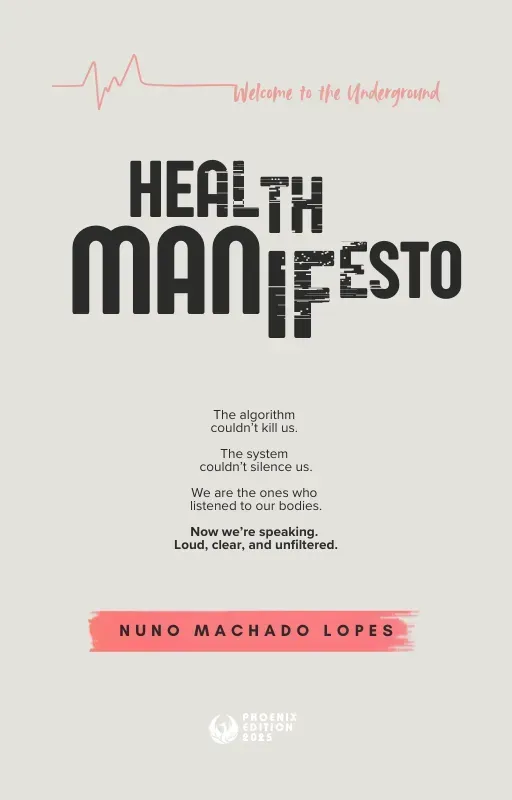
THE HEALTH MANIFESTO

We’re living through the silent collapse

People are tired. Inflamed. Anxious. Overweight. Under-muscled.

Overfed with misinformation, yet undernourished in truth.

This isn’t a book. It’s a call to reclaim what was stolen - energy, strength and clarity.

The ability to say no to a system designed to keep us sick and compliant.

We are sick. Not metaphorically – literally.

Obesity is skyrocketing.

Chronic disease is the default.

Anxiety, depression, infertility and autoimmune dysfunction.

The modern epidemic is not one disease, but a whole ecosystem of slow, preventable collapse.

And it’s not your fault.

You’ve been lied to.

Download The Health manifesto for Free

3 Month Transformation

February 13, 20267 min read

You have spent years putting on weight. Months of bad meals stacked on top of each other, compounding into a body you avoid looking at in mirrors. And still, the idea of committing to three months of structured eating feels impossible.

Let that sink in. Three months represents 0.003% of an average 80-year life. You have already sacrificed far more than that to poor energy, low confidence, and a body that does not match what you know you are capable of.

The process of losing fat is not complicated. It is governed by well documented physiological principles. But your brain will resist every step because you are dismantling decades of ingrained habits. This article breaks down why three months of focused effort works, what the science says about building new behaviors, and how to structure the process so it sticks.

The Physiology of Fat Loss in 90 Days

Fat loss operates on one non-negotiable principle: energy deficit. You must consume fewer calories than your body burns, sustained over weeks and months. A mathematical model published in The Lancet by Hall et al. (2011) demonstrated that body weight changes predictably based on cumulative energy imbalance. The model showed that the body’s weight response to a sustained change in calorie intake has a half time of approximately one year, meaning early results compound over time if you stay consistent.

For most people aiming to lose 10 to 25 kilograms, a moderate caloric deficit of 20 to 30 percent below maintenance calories produces steady fat loss without destroying training performance or triggering severe metabolic adaptation. More aggressive cuts lead to muscle loss, hormonal disruption, and the exact rebound pattern that sends most people back to square one.

The second pillar is protein. A review by Leidy et al. (2015) in the American Journal of Clinical Nutrition examined multiple meta-analyses and found that higher protein diets (between 1.2 and 1.6 g per kilogram of body weight daily) produced greater fat mass loss and better preservation of lean tissue during energy restriction compared to lower protein diets. Protein also increased perceived fullness and elevated satiety hormones after meals, reducing the likelihood of impulsive eating.

In practical terms, this means that three months of controlled eating with adequate protein does not just make you lighter. It reshapes your body composition, so you look and feel different, not just smaller.

Why Your Brain Fights You (And How Small Wins Beat It)

The biggest obstacle to a 90-day transformation is not your metabolism. It is your brain. You are trying to override eating patterns that have been reinforced for decades. Every time you reach for the same comfort food in the same situation, you are running a deeply automated script.

Research by Lally et al. (2010), published in the European Journal of Social Psychology, tracked 96 volunteers who adopted a new daily health behavior over 84 days. The study found that the median time to reach automaticity was 66 days, with a range of 18 to 254 days. The data followed an asymptotic curve: early repetitions of the new behavior produced the largest gains in automaticity, and the gains gradually plateaued. Missing a single day did not significantly derail the process.

This is critical. It means that at the 90-day mark, most new eating behaviors have crossed the threshold into automatic territory. You stop white knuckling through meal prep and start operating on autopilot. The system takes over.

But most people never get there because they set one massive goal (lose 25 kilograms) and only plan to celebrate once, at the end. Research on the progress principle by Amabile and Kramer (2011), based on analysis of nearly 12,000 daily diary entries, found that consistent small wins were the single most powerful driver of motivation and positive engagement. When people experienced even minor forward progress on a meaningful project, their motivation and emotional state improved dramatically.

Applied to fat loss: instead of one distant finish line, create weekly targets. Lose a pound. Hit your protein target five out of seven days. Walk 10,000 steps on Monday through Friday. Each of those micro victories triggers the same motivational response that keeps you going into week two, then week six, then week twelve.

The Three-Month Framework

A reliable 90-day system includes five components.

Caloric deficit. Aim for 20 to 30 percent below your maintenance calories. Use our TDEE calculator to establish your starting point, then adjust based on weekly weigh ins. If you are losing more than 1 percent of body weight per week, eat slightly more. If you are stalling, reduce by 100 to 200 calories.

Protein anchoring. Hit 1.2 to 1.6 grams of protein per kilogram of body weight daily (Leidy et al., 2015). This preserves muscle, stabilizes appetite, and prevents the “skinny fat” outcome where people lose weight but end up with no visible definition.

Boring meals. Eat similar meals each day. This removes decision fatigue, eliminates emotional eating, and turns food into a fueling process rather than entertainment. When your meals are predictable, food loses its power as a dopamine source. Cravings stabilize because your body knows what to expect.

Movement baseline. The American College of Sports Medicine (ACSM) position stand by Donnelly et al. (2009) recommends 150 to 250 minutes per week of moderate to vigorous physical activity for weight management. Combine that with resistance training three to four times per week to preserve lean mass as fat drops. Aim for 8,000 to 12,000 steps daily as your walking baseline.

Weekly review and small wins. Track weight daily. Measure waist circumference weekly. Set one specific target per week and celebrate when you hit it. These small victories compound. At three months, you will see dramatic changes in yourself. At six months, other people will start commenting.

The Real Sacrifice You Are Already Making

Here is the part most people miss. You are already sacrificing. Every year you stay overweight, you pay with reduced energy, lower confidence, worse sleep, higher disease risk, and a body that limits what you can do. Those are not abstract future consequences. They are costs you are paying right now, compounding daily.

Three months of structured eating is not really a sacrifice. It is a trade. You swap temporary food pleasure for permanent physical capability. You exchange dopamine hits from your plate for the feeling of waking up lean, energized, and in control.

Once you prove to yourself that you can commit to 90 days, something shifts. You realize that the “sacrifice” of staying overweight was always the bigger one. You were just too close to it to see.

Final Thoughts

Three months is 0.003% of your life. The physiology of fat loss is well documented. The psychology of habit formation shows that 66 days of consistent repetition is enough to build automatic behavior (Lally et al., 2010). The research on small wins confirms that weekly progress fuels the motivation to keep going (Amabile & Kramer, 2011).

You do not need a new diet. You do not need motivation. You need a 90-day framework with weekly targets, boring meals, and the willingness to celebrate every small win along the way.

Scientific References

  1. Hall KD, Sacks G, Chandramohan D, Chow CC, Wang YC, Gortmaker SL, Swinburn BA. Quantification of the effect of energy imbalance on bodyweight. The Lancet. 2011;378(9793):826–837. https://pubmed.ncbi.nlm.nih.gov/21872751/

  2. Leidy HJ, Clifton PM, Astrup A, Wycherley TP, WesterterpPlantenga MS, LuscombeMarsh ND, Woods SC, Mattes RD. The role of protein in weight loss and maintenance. American Journal of Clinical Nutrition. 2015;101(6):1320S–1329S. https://pubmed.ncbi.nlm.nih.gov/25926512/

  3. Lally P, van Jaarsveld CHM, Potts HWW, Wardle J. How are habits formed: Modelling habit formation in the real world. European Journal of Social Psychology. 2010;40(6):998–1009. https://onlinelibrary.wiley.com/doi/10.1002/ejsp.674

  4. 4. Amabile TM, Kramer SJ. The power of small wins. Harvard Business Review. 2011;89(5):70–80. https://hbr.org/2011/05/the-power-of-small-wins

  5. 5. Donnelly JE, Blair SN, Jakicic JM, Manore MM, Rankin JW, Smith BK. Appropriate Physical Activity Intervention Strategies for Weight Loss and Prevention of Weight Regain for Adults. Medicine & Science in Sports & Exercise. 2009;41(2):459–471. https://pubmed.ncbi.nlm.nih.gov/19127177/

Back to Blog

Disclaimer: This is provided for educational and informational purposes only and does not constitute providing medical advice or professional services. The information provided should not be used for diagnosing or treating a health problem or disease, and those seeking personal medical advice should consult with a licensed physician.

When you’re ready, here are two ways I can help

1. The ShredTech Protocol: Lose fat, build strength, and restore energy with a system built for busy leaders. Evidence-based nutrition, efficient training, real results. Start your transformation here .

2. Private Coaching: For founders and executives who want a complete physical and mental reset. Fully tailored, data-driven, and discreet. Apply here .

Sign up for the weekly mailing list and get exclusive insights, unreleased content, and unfiltered truths the mainstream won’t touch.

Unsubscribe anytime.

Zero guilt. Total control.

ShredTech on Instagram
ShredTech on Facebook
ShredTech on ikTok
Nuno on LinkedIn
ShredTech n YouTube
ShredTech on X
Talk to Us
Soon...
ShredTech on Instagram
ShredTech on Facebook
ShredTech on ikTok
Nuno on LinkedIn
Soon...
Talk to Us
ShredTech on X
ShredTech n YouTube

All the information on this site is provided for educational and informational purposes only and does not constitute providing medical advice or professional services. The information provided should not be used for diagnosing or treating a health problem or disease, and those seeking personal medical advice should consult with a licensed physician.

© Human Due Diligence. 2026.
All Rights Reserved.