
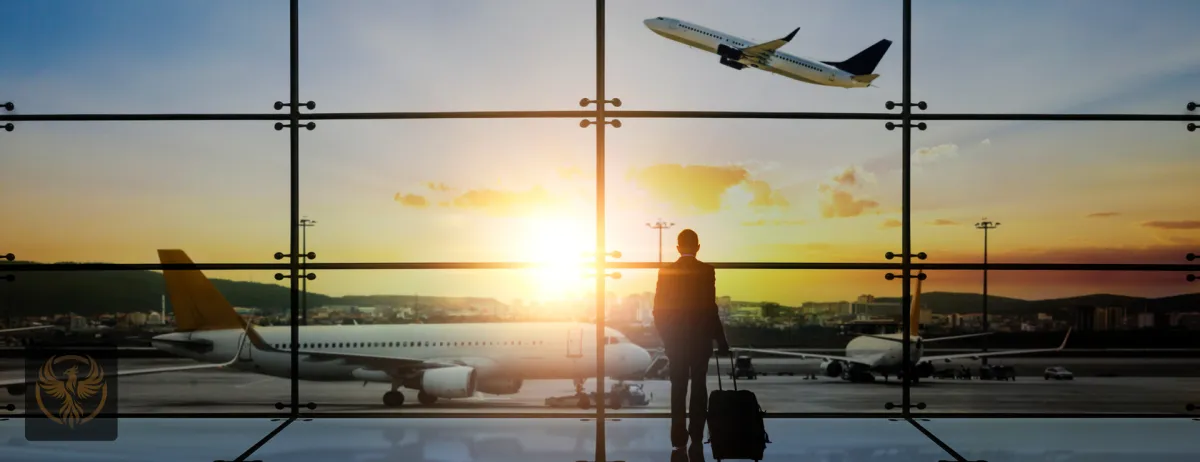
Stay Lean Traveling
Why Travel Doesn’t Ruin Your Diet. Poor Planning Does.
Most people think travel makes healthy eating impossible. Airports, hotels, late dinners. A schedule you don’t control.
But when my clients apply a simple system, something shifts. Travel stops breaking their progress. Structure protects it.
The real problem isn’t the food. It’s the lack of a plan.
The Illusion of Travel Chaos
Work trips feel chaotic because travel disrupts routine. Early flights. Long meetings. Irregular meals. All of this raises stress and lowers discipline.
But chaos isn’t the enemy. Unpreparedness is.
Research on self-regulation shows that when you remove structure, your brain defaults to convenience eating. That means pastries at the airport, oversized restaurant portions, and snacks chosen out of boredom.
When you reinstate structure before you leave home, the environment stops controlling your behaviour.
The Power of Pre-Commitment
Eighty percent of staying lean on the road comes from decisions you make before you take off. Only twenty percent is what you face during the trip.
The moment you eat a proper breakfast before leaving the house, you reduce cravings and impulsive choices.
That single step stabilises appetite, lowers stress, and prevents the airport free-for-all that derails most people.
Pre-commitment removes the emotional load. You follow a plan instead of reacting to the moment.
The System That Removes Friction
I use a simple framework across all my trips. It works because it removes decisions.
I start with a complete breakfast. Protein, fruit, or vegetables. This prevents the hunger spike that leads to poor choices later.
I pack strategic snacks. Every option hits at least twenty five grams of protein and stays under one hundred fifty calories. This rule eliminates the fake healthy snacks that look good but cause calorie creep.
Then I take control of the hotel environment by asking for a fridge. Not an upgrade. A fridge.
I buy fruit, protein yogurt, carrots, cooked chicken, and salad. That becomes my room service.
Restaurants follow the same pattern. Lean protein. Vegetables. No surprises. When needed, I tell them I cannot have butter or oil. This removes hidden calories that damage consistency.
Buffets become simple too. I choose shrimp, fish, crab, salad, and fruit. I walk past the dessert section without slowing down.
Structure wins because nothing blindsides you.
The Psychology of Travel Eating
Travel doesn’t make people overeat. Boredom does.
Long flights. Empty hotel rooms. Delayed meetings. People look for stimulation and reward. Food becomes the fastest option.
When you bring predictable snacks and clear rules, reward seeking loses power.
The behaviour becomes automatic.
You eat because it supports the goal, not because the environment tempts you.
Automaticity is the same mechanism behind high performance in any field. Repetition reduces friction. Routine protects results.
Reverse Engineering the Pattern
Most people gain weight when they travel for one reason.
They react to the environment instead of shaping it.
The moment you build structure, the environment stops dictating your behaviour.
You reduce overeating.
You stay consistent.
You return home without losing progress.
The Silent System
This is the ShredTech principle in its purest form:
Structure over chaos, repetition over stimulation, control over motivation.
Leaders thrive in routine because they understand that freedom is found in discipline.
Travel is no exception.
Key Takeaway: Travel doesn’t break your diet. Lack of preparation does. When you add structure before you leave home, you protect your progress everywhere you go.
Scientific References
Leidy H J et al. (2015). The role of protein in appetite regulation and weight management. American Journal of Clinical Nutrition.
Phillips S M. (2014). A brief review of higher protein diets and their influence on appetite and energy intake. Nutrients.
Wansink B. Painter J. (2006). Environmental cues and overeating in adults. Obesity Research.
Burton W. Chen C. Schultz A. (2011). The association between business travel and obesity risk. Journal of Occupational and Environmental Medicine.









Mail
Facebook
LinkedIn
X
Pinterest
Snapchat
Reddit