

Restart Fat Loss
If I had to start over from zero, no gym, no trainer, no prior knowledge, I would do the exact same thing I did the first time. Not because the plan was exciting. Because it was simple, it was trackable, and it worked.
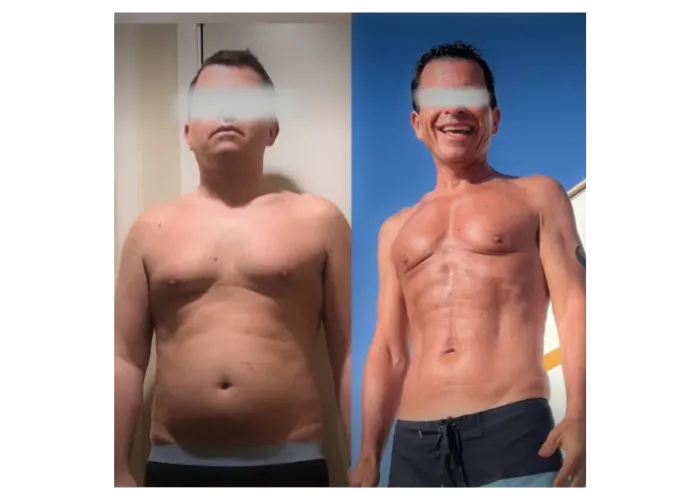
I lost 58 pounds in under six months using four tools you can buy for less than one month of a gym membership: a smart scale, a food scale, a calorie tracking app, and a step counter. No barbells. No machines. No personal trainer charging by the hour.
The fitness industry sells complexity because complexity keeps you buying. New programs. New supplements. New equipment. The research tells a different story. Fat loss comes down to energy balance, protein intake, consistent tracking, and time. Everything else is noise.
Here is the system, backed by the studies that support each component.
The Energy Deficit Is the Only Non-Negotiable
A study published in Annals of Nutrition and Metabolism by Redman et al. (2007) demonstrated that fat loss depends on energy deficit alone, independent of the method used to create that deficit. Participants who reduced calories through diet only and those who combined diet with exercise lost equivalent amounts of body weight (approximately 10%) and fat mass (approximately 24%) over six months, provided the total energy deficit was the same.
This is why a gym membership is optional for fat loss. The deficit drives the result. Exercise adds fitness benefits, preserves muscle, and improves cardiovascular health. But the fat comes off because you consume less energy than you burn. Period.
The National Institutes of Health clinical guidelines on obesity recommend a caloric deficit of 500 to 1,000 calories per day to achieve a safe rate of weight loss of 0.5 to 1 kilogram per week. My approach was more aggressive, eating below 1,300 calories daily against a maintenance level of around 2,000. That level of deficit demands careful planning and high protein intake to prevent muscle loss.
Start by searching for a TDEE calculator. Enter your stats. Subtract 500 calories. That is your daily target. Simple arithmetic, not rocket science.
Protein Protects What the Deficit Removes
Cutting calories without adequate protein turns you into a smaller, softer version of yourself. You lose weight but you also lose muscle. A review by Leidy et al. (2015) published in The American Journal of Clinical Nutrition examined multiple meta-analyses and found that higher protein energy restriction diets consistently produced greater fat mass loss and better preservation of lean mass compared to lower protein diets.
The recommended range for preserving muscle during a calorie deficit sits between 1.6 and 2.4 grams of protein per kilogram of body weight per day. Pasiakos et al. (2015) confirmed this in a review published in The FASEB Journal, showing that high protein diets in this range attenuate muscle protein breakdown and restore muscle protein synthesis even during significant energy restriction.
In practice, this means structuring every meal around a protein source. Protein powder becomes essential when you are eating at a large deficit because it delivers high protein with minimal calories. High protein yoghurts, lean meats, egg whites, and casein-based snacks fill the remaining gaps.
My daily target was 160 grams of protein on fewer than 1,300 calories. That leaves almost no room for junk food. Which is exactly the point. When protein takes priority, poor choices get pushed off the plate automatically.
Tracking Everything Is What Makes It Work
A systematic review by Burke et al. (2011) published in the Journal of the American Dietetic Association examined 22 studies on self-monitoring and weight loss. All 15 studies that focused on dietary self-monitoring found a significant association between consistent tracking and weight loss. People who recorded their food intake lost more weight than those who did not, regardless of the specific diet they followed.
More recently, Berry et al. (2021) conducted a meta-analysis of 12 randomized controlled trials and found that digital self-monitoring of diet and physical activity produced a statistically significant weight loss of 2.87 kilograms compared to controls. The effect was clear: tracking creates awareness, awareness changes behavior, and changed behavior produces results.
This is why four tools matter more than any piece of gym equipment. A smart scale gives you daily weight data and trends over weeks. A food scale removes the guesswork from portion sizes, because research from the New England Journal of Medicine by Lichtman et al. (1992) showed that people routinely underreport their caloric intake by up to 47% and overestimate their physical activity by up to 51%. A calorie tracking app logs every meal. A step counter ensures your daily movement baseline stays consistent.
Track every day. Analyze every week. The daily number will fluctuate. Water retention, digestion, hormones. The weekly trend tells you whether the plan is working. If the trend stalls for two weeks, adjust. Drop 100 calories or add 2,000 steps. Small corrections compound into large outcomes.
The Bodyweight Baseline Replaces the Gym
The CALERIE trial by Redman et al. (2007) confirmed that exercise and calorie restriction produce equivalent body composition changes when the energy deficit is matched. You do not need a squat rack to lose 55 pounds. You need to move consistently and protect your muscle with protein and basic resistance work.
Ab rollers and push-ups, done every morning and evening, provide enough stimulus to signal your body to hold onto muscle during a calorie deficit. Start with 10 reps. Add one every day. By month three, you are doing sets of 100. That is progressive overload without ever stepping into a gym.
Walking replaces cardio machines. Skip elevators. Park further away. Target 8,000 to 12,000 steps daily. Walking burns calories without spiking your appetite the way intense cardio does, and it is the most sustainable form of movement for busy professionals who cannot commit to a gym schedule.
This approach works because it lowers every barrier to entry. No commute to the gym. No monthly fees. No intimidation. Just your body, your floor, and the discipline to show up twice a day for five minutes.
Final Thoughts
The fitness industry wants you to believe fat loss requires expensive equipment, complex programming, and professional supervision. The research says otherwise. Energy deficit drives fat loss. Protein preserves muscle. Tracking keeps you honest. Consistency does the rest.
By month one, the scale moves and your clothes fit differently. By month three, people around you start asking questions. By month six, you look like a different person. Not because you did anything revolutionary. Because you did something boring, every single day, and never stopped.
Four tools. One system. No gym required. If I had to do it all over again, I would change nothing. The plan worked at 55 and it will work for you, regardless of where you are starting from. The only question is whether you are willing to be bored for six months to build a body that lasts.
Scientific References
Redman, L. M., Heilbronn, L. K., Martin, C. K., et al. (2007). Effect of calorie restriction with or without exercise on body composition and fat distribution. The Journal of Clinical Endocrinology & Metabolism, 92(3), 865–872. https://pmc.ncbi.nlm.nih.gov/articles/PMC2692618/
Leidy, H. J., Clifton, P. M., Astrup, A., et al. (2015). The role of protein in weight loss and maintenance. The American Journal of Clinical Nutrition, 101(6), 1320S–1329S. https://pubmed.ncbi.nlm.nih.gov/25926512/
Pasiakos, S. M., Margolis, L. M., & Orr, J. S. (2015). Optimized dietary strategies to protect skeletal muscle mass during periods of unavoidable energy deficit. The FASEB Journal, 29(4), 1136–1142. https://pubmed.ncbi.nlm.nih.gov/25550460/
Burke, L. E., Wang, J., & Sevick, M. A. (2011). Self monitoring in weight loss: A systematic review of the literature. Journal of the American Dietetic Association, 111(1), 92–102. https://pubmed.ncbi.nlm.nih.gov/21185970/
Lichtman, S. W., Pisarska, K., Berman, E. R., et al. (1992). Discrepancy between self reported and actual caloric intake and exercise in obese subjects. The New England Journal of Medicine, 327(27), 1893–1898. https://www.nejm.org/doi/full/10.1056/NEJM199212313272701









Mail
Facebook
LinkedIn
X
Pinterest
Snapchat
Reddit