
Belly Fat Last

Belly Fat Last

February 26, 20267 min read

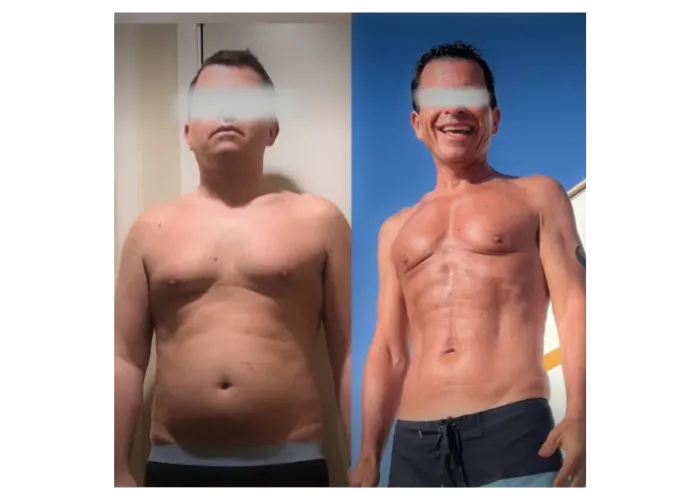
Your face changes first. Then your arms. Then your legs. Then your face again. Your stomach sits there, unmoved, while everything else responds to the work you are doing. If you have experienced this, you are not failing. You are following the exact biological sequence your body was designed to follow.

Most people interpret a stubborn stomach as evidence that their approach is not working. They switch programs. They cut calories further. Or they quit entirely, often just weeks before abdominal fat would have started to respond. The data shows that belly fat resistance is not a flaw in your plan. It is a feature of human physiology that can only be overcome with sustained consistency and an understanding of why the delay exists in the first place.

Two Types of Belly Fat and Why They Respond on Different Timelines

Your abdomen contains two distinct fat depots that behave very differently during weight loss. Visceral adipose tissue (VAT) sits deep inside the abdominal cavity, surrounding your organs. Subcutaneous adipose tissue (SAT) sits just beneath the skin. It is the layer you can pinch. Ibrahim (2010) published a comprehensive review in Obesity Reviews describing how these two depots differ in cellular composition, vascular supply, receptor density, and hormonal response. Visceral fat is more metabolically active, more vascular, and more responsive to catecholamine stimulated fat breakdown.

A systematic review by Chaston and Dixon (2008) analyzed 61 studies with 98 cohort time points examining how visceral and subcutaneous abdominal fat change during weight loss interventions. They found that visceral fat is lost preferentially during modest weight loss. Early in a fat loss phase, your body draws more heavily from the deep visceral depot. This is why waist circumference can decrease before visible abdominal definition appears. The internal fat is dropping, but the external layer that determines how your stomach looks has barely moved.

Critically, Chaston and Dixon also found that the preferential loss of visceral fat attenuates with greater total weight loss. As you lose more weight, the ratio shifts and subcutaneous fat begins to mobilize more proportionally. But this transition takes time. For someone with 20 to 25 kilograms to lose, visible abdominal changes in the subcutaneous layer typically emerge between weeks 12 and 24 of consistent energy deficit, well after other regions of the body have already responded.

The Receptor Biology That Makes Belly Fat Resistant

Fat cells release stored energy through a process called lipolysis, which is regulated by adrenergic receptors on the cell surface. Beta adrenergic receptors stimulate fat breakdown. Alpha 2 adrenergic receptors inhibit it. The ratio between these two receptor types determines how readily a fat cell gives up its contents when catecholamines, the hormones released during exercise and caloric deficit, arrive.

Stich and colleagues (2000) used micro-dialysis probes in the subcutaneous abdominal fat of lean and obese men during exercise and found that alpha 2 adrenergic receptor activation by epinephrine impaired fat mobilization specifically in the abdominal subcutaneous depot of obese subjects. The fat cells in your belly have a higher proportion of the receptors that say "stop releasing fat" compared to cells in your arms, face, or legs.

Reynisdottir and colleagues (1994) examined this further in 25 women with upper body obesity and found a tenfold reduction in lipolytic sensitivity to noradrenaline in abdominal subcutaneous fat cells compared to non obese controls. This was driven by a 70% reduction in beta 2 adrenoceptor density on the cell surface. The cells were physically less equipped to respond to the fat burning signal.

There is also a blood flow component. Frayn and Karpe (2014) demonstrated that adipose tissue blood flow per 100 grams of tissue is significantly lower in obesity, and its responsiveness to meals and exercise is reduced. Less blood flow means fewer catecholamines reach the fat cells, which means less lipolysis even when the hormonal environment is otherwise favourable. Your belly fat is essentially behind a double barrier: resistant receptors and reduced delivery of the signals that would overcome them.

The Timeline Most People Never See

Understanding the sequence eliminates the panic that drives most people to quit. During weeks one through four of a sustained caloric deficit, your body preferentially draws from visceral fat stores and from more metabolically active peripheral fat depots. You will notice changes in your face, arms, and legs. Your clothes may fit differently. But your stomach will look largely unchanged.

During weeks four through twelve, visceral fat continues to decline. Waist circumference may decrease as the deep abdominal fat reduces, but the subcutaneous layer still resists at a higher rate. This is the phase where most people quit. The mirror shows progress everywhere except the one place they care about most. They interpret this as failure when it is actually the expected biological sequence.

Between weeks twelve and twenty four, as total body fat drops further, the subcutaneous abdominal depot begins to mobilise at a more meaningful rate. The alpha 2 adrenergic braking effect is progressively overcome by the sustained catecholamine exposure from consistent caloric deficit and regular exercise. Visible abdominal definition starts to emerge.

The tipping point that the script describes, the moment when belly fat finally begins to drop visibly, is not random. It is the predictable result of sustained consistency overcoming receptor resistance. Ohkawara and colleagues (2007) conducted a systematic review of clinical trials examining the dose response relationship between aerobic exercise and visceral fat reduction, finding that a minimum threshold of activity sustained over time was required to produce significant abdominal fat loss. Below that threshold, the results were inconsistent. Above it, the response was reliable.

What This Means for Your Strategy

If you understand the biology, you can stop fighting it and start working with it. First, measure waist circumference weekly rather than relying on the mirror. Visceral fat loss reduces waist measurements before subcutaneous changes become visible. This gives you objective evidence of progress during the phase when the mirror lies to you.

Second, maintain a moderate caloric deficit of 20 to 30 percent below maintenance rather than an aggressive one. Severe restriction triggers cortisol elevation, which preferentially promotes abdominal fat storage, the opposite of what you want. A steady, moderate deficit keeps cortisol manageable while still driving the sustained energy imbalance that eventually overcomes receptor resistance.

Third, maintain protein intake at 1.8 to 2.2 grams per kilogram of body weight to preserve lean mass. The goal is to remove the fat layer, not to shrink the muscle beneath it. Without adequate protein, you lose muscle alongside fat and end up smaller but still soft around the middle.

Fourth, commit to a minimum of six months before evaluating your abdominal results. The research consistently shows that subcutaneous belly fat responds on a longer timeline than any other depot. If you are evaluating your program at four weeks or even eight weeks based on stomach appearance, you are measuring the wrong variable at the wrong time.

Final Thoughts

Your belly fat is not stubborn because of something you are doing wrong. It is stubborn because of alpha 2 adrenergic receptor density, reduced blood flow, and the evolutionary priority your body places on protecting abdominal energy stores. These are not obstacles you overcome with a better program. They are biological realities you overcome with time.

Scientific References

  1. Chaston, T.B. & Dixon, J.B. (2008). Factors associated with percent change in visceral versus subcutaneous abdominal fat during weight loss: findings from a systematic review. International Journal of Obesity, 32, 619–628. https://pubmed.ncbi.nlm.nih.gov/18180786/

  2. Stich, V., De Glisezinski, I., Crampes, F., Hejnova, J., Cottet‐Emard, J.M., Galitzky, J., Lafontan, M., Riviere, D. & Berlan, M. (2000). Activation of alpha 2 adrenergic receptors impairs exercise induced lipolysis in SCAT of obese subjects. American Journal of Physiology: Regulatory, Integrative and Comparative Physiology, 279(2), R499–R504. https://pubmed.ncbi.nlm.nih.gov/10938238/

  3. Reynisdottir, S., Ellerfeldt, K., Wahrenberg, H., Lithell, H. & Arner, P. (1994). Catecholamine resistance in fat cells of women with upper body obesity due to decreased expression of beta 2 adrenoceptors. Diabetologia, 37(4), 428–435. https://pubmed.ncbi.nlm.nih.gov/8063046/

  4. Frayn, K.N. & Karpe, F. (2014). Regulation of human subcutaneous adipose tissue blood flow. International Journal of Obesity, 38(8), 1019–1026. https://pubmed.ncbi.nlm.nih.gov/24166067/

  5. Ibrahim, M.M. (2010). Subcutaneous and visceral adipose tissue: structural and functional differences. Obesity Reviews, 11(1), 11–18. https://pubmed.ncbi.nlm.nih.gov/19656312/

fat lossweight lossabsexecutivesleaderstransformation
Back to Blog

Belly Fat Last

February 26, 20267 min read

Your face changes first. Then your arms. Then your legs. Then your face again. Your stomach sits there, unmoved, while everything else responds to the work you are doing. If you have experienced this, you are not failing. You are following the exact biological sequence your body was designed to follow.

Most people interpret a stubborn stomach as evidence that their approach is not working. They switch programs. They cut calories further. Or they quit entirely, often just weeks before abdominal fat would have started to respond. The data shows that belly fat resistance is not a flaw in your plan. It is a feature of human physiology that can only be overcome with sustained consistency and an understanding of why the delay exists in the first place.

Two Types of Belly Fat and Why They Respond on Different Timelines

Your abdomen contains two distinct fat depots that behave very differently during weight loss. Visceral adipose tissue (VAT) sits deep inside the abdominal cavity, surrounding your organs. Subcutaneous adipose tissue (SAT) sits just beneath the skin. It is the layer you can pinch. Ibrahim (2010) published a comprehensive review in Obesity Reviews describing how these two depots differ in cellular composition, vascular supply, receptor density, and hormonal response. Visceral fat is more metabolically active, more vascular, and more responsive to catecholamine stimulated fat breakdown.

A systematic review by Chaston and Dixon (2008) analyzed 61 studies with 98 cohort time points examining how visceral and subcutaneous abdominal fat change during weight loss interventions. They found that visceral fat is lost preferentially during modest weight loss. Early in a fat loss phase, your body draws more heavily from the deep visceral depot. This is why waist circumference can decrease before visible abdominal definition appears. The internal fat is dropping, but the external layer that determines how your stomach looks has barely moved.

Critically, Chaston and Dixon also found that the preferential loss of visceral fat attenuates with greater total weight loss. As you lose more weight, the ratio shifts and subcutaneous fat begins to mobilize more proportionally. But this transition takes time. For someone with 20 to 25 kilograms to lose, visible abdominal changes in the subcutaneous layer typically emerge between weeks 12 and 24 of consistent energy deficit, well after other regions of the body have already responded.

The Receptor Biology That Makes Belly Fat Resistant

Fat cells release stored energy through a process called lipolysis, which is regulated by adrenergic receptors on the cell surface. Beta adrenergic receptors stimulate fat breakdown. Alpha 2 adrenergic receptors inhibit it. The ratio between these two receptor types determines how readily a fat cell gives up its contents when catecholamines, the hormones released during exercise and caloric deficit, arrive.

Stich and colleagues (2000) used micro-dialysis probes in the subcutaneous abdominal fat of lean and obese men during exercise and found that alpha 2 adrenergic receptor activation by epinephrine impaired fat mobilization specifically in the abdominal subcutaneous depot of obese subjects. The fat cells in your belly have a higher proportion of the receptors that say "stop releasing fat" compared to cells in your arms, face, or legs.

Reynisdottir and colleagues (1994) examined this further in 25 women with upper body obesity and found a tenfold reduction in lipolytic sensitivity to noradrenaline in abdominal subcutaneous fat cells compared to non obese controls. This was driven by a 70% reduction in beta 2 adrenoceptor density on the cell surface. The cells were physically less equipped to respond to the fat burning signal.

There is also a blood flow component. Frayn and Karpe (2014) demonstrated that adipose tissue blood flow per 100 grams of tissue is significantly lower in obesity, and its responsiveness to meals and exercise is reduced. Less blood flow means fewer catecholamines reach the fat cells, which means less lipolysis even when the hormonal environment is otherwise favourable. Your belly fat is essentially behind a double barrier: resistant receptors and reduced delivery of the signals that would overcome them.

The Timeline Most People Never See

Understanding the sequence eliminates the panic that drives most people to quit. During weeks one through four of a sustained caloric deficit, your body preferentially draws from visceral fat stores and from more metabolically active peripheral fat depots. You will notice changes in your face, arms, and legs. Your clothes may fit differently. But your stomach will look largely unchanged.

During weeks four through twelve, visceral fat continues to decline. Waist circumference may decrease as the deep abdominal fat reduces, but the subcutaneous layer still resists at a higher rate. This is the phase where most people quit. The mirror shows progress everywhere except the one place they care about most. They interpret this as failure when it is actually the expected biological sequence.

Between weeks twelve and twenty four, as total body fat drops further, the subcutaneous abdominal depot begins to mobilise at a more meaningful rate. The alpha 2 adrenergic braking effect is progressively overcome by the sustained catecholamine exposure from consistent caloric deficit and regular exercise. Visible abdominal definition starts to emerge.

The tipping point that the script describes, the moment when belly fat finally begins to drop visibly, is not random. It is the predictable result of sustained consistency overcoming receptor resistance. Ohkawara and colleagues (2007) conducted a systematic review of clinical trials examining the dose response relationship between aerobic exercise and visceral fat reduction, finding that a minimum threshold of activity sustained over time was required to produce significant abdominal fat loss. Below that threshold, the results were inconsistent. Above it, the response was reliable.

What This Means for Your Strategy

If you understand the biology, you can stop fighting it and start working with it. First, measure waist circumference weekly rather than relying on the mirror. Visceral fat loss reduces waist measurements before subcutaneous changes become visible. This gives you objective evidence of progress during the phase when the mirror lies to you.

Second, maintain a moderate caloric deficit of 20 to 30 percent below maintenance rather than an aggressive one. Severe restriction triggers cortisol elevation, which preferentially promotes abdominal fat storage, the opposite of what you want. A steady, moderate deficit keeps cortisol manageable while still driving the sustained energy imbalance that eventually overcomes receptor resistance.

Third, maintain protein intake at 1.8 to 2.2 grams per kilogram of body weight to preserve lean mass. The goal is to remove the fat layer, not to shrink the muscle beneath it. Without adequate protein, you lose muscle alongside fat and end up smaller but still soft around the middle.

Fourth, commit to a minimum of six months before evaluating your abdominal results. The research consistently shows that subcutaneous belly fat responds on a longer timeline than any other depot. If you are evaluating your program at four weeks or even eight weeks based on stomach appearance, you are measuring the wrong variable at the wrong time.

Final Thoughts

Your belly fat is not stubborn because of something you are doing wrong. It is stubborn because of alpha 2 adrenergic receptor density, reduced blood flow, and the evolutionary priority your body places on protecting abdominal energy stores. These are not obstacles you overcome with a better program. They are biological realities you overcome with time.

Scientific References

  1. Chaston, T.B. & Dixon, J.B. (2008). Factors associated with percent change in visceral versus subcutaneous abdominal fat during weight loss: findings from a systematic review. International Journal of Obesity, 32, 619–628. https://pubmed.ncbi.nlm.nih.gov/18180786/

  2. Stich, V., De Glisezinski, I., Crampes, F., Hejnova, J., Cottet‐Emard, J.M., Galitzky, J., Lafontan, M., Riviere, D. & Berlan, M. (2000). Activation of alpha 2 adrenergic receptors impairs exercise induced lipolysis in SCAT of obese subjects. American Journal of Physiology: Regulatory, Integrative and Comparative Physiology, 279(2), R499–R504. https://pubmed.ncbi.nlm.nih.gov/10938238/

  3. Reynisdottir, S., Ellerfeldt, K., Wahrenberg, H., Lithell, H. & Arner, P. (1994). Catecholamine resistance in fat cells of women with upper body obesity due to decreased expression of beta 2 adrenoceptors. Diabetologia, 37(4), 428–435. https://pubmed.ncbi.nlm.nih.gov/8063046/

  4. Frayn, K.N. & Karpe, F. (2014). Regulation of human subcutaneous adipose tissue blood flow. International Journal of Obesity, 38(8), 1019–1026. https://pubmed.ncbi.nlm.nih.gov/24166067/

  5. Ibrahim, M.M. (2010). Subcutaneous and visceral adipose tissue: structural and functional differences. Obesity Reviews, 11(1), 11–18. https://pubmed.ncbi.nlm.nih.gov/19656312/

fat lossweight lossabsexecutivesleaderstransformation
Back to Blog

THE HEALTH MANIFESTO

We’re living through the silent collapse

People are tired. Inflamed. Anxious. Overweight. Under-muscled.

Overfed with misinformation, yet undernourished in truth.

This isn’t a book. It’s a call to reclaim what was stolen - energy, strength and clarity.

The ability to say no to a system designed to keep us sick and compliant.

We are sick. Not metaphorically – literally.

Obesity is skyrocketing.

Chronic disease is the default.

Anxiety, depression, infertility and autoimmune dysfunction.

The modern epidemic is not one disease, but a whole ecosystem of slow, preventable collapse.

And it’s not your fault.

You’ve been lied to.

Download The Health manifesto for Free

Belly Fat Last

February 26, 20267 min read

Your face changes first. Then your arms. Then your legs. Then your face again. Your stomach sits there, unmoved, while everything else responds to the work you are doing. If you have experienced this, you are not failing. You are following the exact biological sequence your body was designed to follow.

Most people interpret a stubborn stomach as evidence that their approach is not working. They switch programs. They cut calories further. Or they quit entirely, often just weeks before abdominal fat would have started to respond. The data shows that belly fat resistance is not a flaw in your plan. It is a feature of human physiology that can only be overcome with sustained consistency and an understanding of why the delay exists in the first place.

Two Types of Belly Fat and Why They Respond on Different Timelines

Your abdomen contains two distinct fat depots that behave very differently during weight loss. Visceral adipose tissue (VAT) sits deep inside the abdominal cavity, surrounding your organs. Subcutaneous adipose tissue (SAT) sits just beneath the skin. It is the layer you can pinch. Ibrahim (2010) published a comprehensive review in Obesity Reviews describing how these two depots differ in cellular composition, vascular supply, receptor density, and hormonal response. Visceral fat is more metabolically active, more vascular, and more responsive to catecholamine stimulated fat breakdown.

A systematic review by Chaston and Dixon (2008) analyzed 61 studies with 98 cohort time points examining how visceral and subcutaneous abdominal fat change during weight loss interventions. They found that visceral fat is lost preferentially during modest weight loss. Early in a fat loss phase, your body draws more heavily from the deep visceral depot. This is why waist circumference can decrease before visible abdominal definition appears. The internal fat is dropping, but the external layer that determines how your stomach looks has barely moved.

Critically, Chaston and Dixon also found that the preferential loss of visceral fat attenuates with greater total weight loss. As you lose more weight, the ratio shifts and subcutaneous fat begins to mobilize more proportionally. But this transition takes time. For someone with 20 to 25 kilograms to lose, visible abdominal changes in the subcutaneous layer typically emerge between weeks 12 and 24 of consistent energy deficit, well after other regions of the body have already responded.

The Receptor Biology That Makes Belly Fat Resistant

Fat cells release stored energy through a process called lipolysis, which is regulated by adrenergic receptors on the cell surface. Beta adrenergic receptors stimulate fat breakdown. Alpha 2 adrenergic receptors inhibit it. The ratio between these two receptor types determines how readily a fat cell gives up its contents when catecholamines, the hormones released during exercise and caloric deficit, arrive.

Stich and colleagues (2000) used micro-dialysis probes in the subcutaneous abdominal fat of lean and obese men during exercise and found that alpha 2 adrenergic receptor activation by epinephrine impaired fat mobilization specifically in the abdominal subcutaneous depot of obese subjects. The fat cells in your belly have a higher proportion of the receptors that say "stop releasing fat" compared to cells in your arms, face, or legs.

Reynisdottir and colleagues (1994) examined this further in 25 women with upper body obesity and found a tenfold reduction in lipolytic sensitivity to noradrenaline in abdominal subcutaneous fat cells compared to non obese controls. This was driven by a 70% reduction in beta 2 adrenoceptor density on the cell surface. The cells were physically less equipped to respond to the fat burning signal.

There is also a blood flow component. Frayn and Karpe (2014) demonstrated that adipose tissue blood flow per 100 grams of tissue is significantly lower in obesity, and its responsiveness to meals and exercise is reduced. Less blood flow means fewer catecholamines reach the fat cells, which means less lipolysis even when the hormonal environment is otherwise favourable. Your belly fat is essentially behind a double barrier: resistant receptors and reduced delivery of the signals that would overcome them.

The Timeline Most People Never See

Understanding the sequence eliminates the panic that drives most people to quit. During weeks one through four of a sustained caloric deficit, your body preferentially draws from visceral fat stores and from more metabolically active peripheral fat depots. You will notice changes in your face, arms, and legs. Your clothes may fit differently. But your stomach will look largely unchanged.

During weeks four through twelve, visceral fat continues to decline. Waist circumference may decrease as the deep abdominal fat reduces, but the subcutaneous layer still resists at a higher rate. This is the phase where most people quit. The mirror shows progress everywhere except the one place they care about most. They interpret this as failure when it is actually the expected biological sequence.

Between weeks twelve and twenty four, as total body fat drops further, the subcutaneous abdominal depot begins to mobilise at a more meaningful rate. The alpha 2 adrenergic braking effect is progressively overcome by the sustained catecholamine exposure from consistent caloric deficit and regular exercise. Visible abdominal definition starts to emerge.

The tipping point that the script describes, the moment when belly fat finally begins to drop visibly, is not random. It is the predictable result of sustained consistency overcoming receptor resistance. Ohkawara and colleagues (2007) conducted a systematic review of clinical trials examining the dose response relationship between aerobic exercise and visceral fat reduction, finding that a minimum threshold of activity sustained over time was required to produce significant abdominal fat loss. Below that threshold, the results were inconsistent. Above it, the response was reliable.

What This Means for Your Strategy

If you understand the biology, you can stop fighting it and start working with it. First, measure waist circumference weekly rather than relying on the mirror. Visceral fat loss reduces waist measurements before subcutaneous changes become visible. This gives you objective evidence of progress during the phase when the mirror lies to you.

Second, maintain a moderate caloric deficit of 20 to 30 percent below maintenance rather than an aggressive one. Severe restriction triggers cortisol elevation, which preferentially promotes abdominal fat storage, the opposite of what you want. A steady, moderate deficit keeps cortisol manageable while still driving the sustained energy imbalance that eventually overcomes receptor resistance.

Third, maintain protein intake at 1.8 to 2.2 grams per kilogram of body weight to preserve lean mass. The goal is to remove the fat layer, not to shrink the muscle beneath it. Without adequate protein, you lose muscle alongside fat and end up smaller but still soft around the middle.

Fourth, commit to a minimum of six months before evaluating your abdominal results. The research consistently shows that subcutaneous belly fat responds on a longer timeline than any other depot. If you are evaluating your program at four weeks or even eight weeks based on stomach appearance, you are measuring the wrong variable at the wrong time.

Final Thoughts

Your belly fat is not stubborn because of something you are doing wrong. It is stubborn because of alpha 2 adrenergic receptor density, reduced blood flow, and the evolutionary priority your body places on protecting abdominal energy stores. These are not obstacles you overcome with a better program. They are biological realities you overcome with time.

Scientific References

  1. Chaston, T.B. & Dixon, J.B. (2008). Factors associated with percent change in visceral versus subcutaneous abdominal fat during weight loss: findings from a systematic review. International Journal of Obesity, 32, 619–628. https://pubmed.ncbi.nlm.nih.gov/18180786/

  2. Stich, V., De Glisezinski, I., Crampes, F., Hejnova, J., Cottet‐Emard, J.M., Galitzky, J., Lafontan, M., Riviere, D. & Berlan, M. (2000). Activation of alpha 2 adrenergic receptors impairs exercise induced lipolysis in SCAT of obese subjects. American Journal of Physiology: Regulatory, Integrative and Comparative Physiology, 279(2), R499–R504. https://pubmed.ncbi.nlm.nih.gov/10938238/

  3. Reynisdottir, S., Ellerfeldt, K., Wahrenberg, H., Lithell, H. & Arner, P. (1994). Catecholamine resistance in fat cells of women with upper body obesity due to decreased expression of beta 2 adrenoceptors. Diabetologia, 37(4), 428–435. https://pubmed.ncbi.nlm.nih.gov/8063046/

  4. Frayn, K.N. & Karpe, F. (2014). Regulation of human subcutaneous adipose tissue blood flow. International Journal of Obesity, 38(8), 1019–1026. https://pubmed.ncbi.nlm.nih.gov/24166067/

  5. Ibrahim, M.M. (2010). Subcutaneous and visceral adipose tissue: structural and functional differences. Obesity Reviews, 11(1), 11–18. https://pubmed.ncbi.nlm.nih.gov/19656312/

Back to Blog

Disclaimer: This is provided for educational and informational purposes only and does not constitute providing medical advice or professional services. The information provided should not be used for diagnosing or treating a health problem or disease, and those seeking personal medical advice should consult with a licensed physician.

When you’re ready, here are two ways I can help

1. The ShredTech Protocol: Lose fat, build strength, and restore energy with a system built for busy leaders. Evidence-based nutrition, efficient training, real results. Start your transformation here .

2. Private Coaching: For founders and executives who want a complete physical and mental reset. Fully tailored, data-driven, and discreet. Apply here .

Sign up for the weekly mailing list and get exclusive insights, unreleased content, and unfiltered truths the mainstream won’t touch.

Unsubscribe anytime.

Zero guilt. Total control.

ShredTech on Instagram
ShredTech on Facebook
ShredTech on ikTok
Nuno on LinkedIn
ShredTech n YouTube
ShredTech on X
Talk to Us
Soon...
ShredTech on Instagram
ShredTech on Facebook
ShredTech on ikTok
Nuno on LinkedIn
Soon...
Talk to Us
ShredTech on X
ShredTech n YouTube

All the information on this site is provided for educational and informational purposes only and does not constitute providing medical advice or professional services. The information provided should not be used for diagnosing or treating a health problem or disease, and those seeking personal medical advice should consult with a licensed physician.

© Human Due Diligence. 2026.
All Rights Reserved.